


 Cart
Cart
 sales@molnova.com



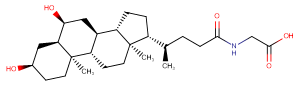
glycohyodeoxycholic acid
CAS No. 13042-33-6
glycohyodeoxycholic acid( —— )
Catalog No. M21219 CAS No. 13042-33-6
glycohyodeoxycholic acid is a major metabolite of the secondary bile acid hyodeoxycholic acid in humans.
Purity : >98% (HPLC)
 COA
Datasheet
HNMR
HPLC
MSDS
Handing Instructions
COA
Datasheet
HNMR
HPLC
MSDS
Handing Instructions
| Size | Price / USD | Stock | Quantity |
| 25MG | 120 | Get Quote |


|
| 100MG | Get Quote | Get Quote |
|
| 200MG | Get Quote | Get Quote |
|
| 500MG | Get Quote | Get Quote |
|
| 1G | Get Quote | Get Quote |
|
Biological Information
-
Product Nameglycohyodeoxycholic acid
-
NoteResearch use only, not for human use.
-
Brief Descriptionglycohyodeoxycholic acid is a major metabolite of the secondary bile acid hyodeoxycholic acid in humans.
-
Descriptionglycohyodeoxycholic acid is a major metabolite of the secondary bile acid hyodeoxycholic acid in humans.
-
In Vitro——
-
In Vivo——
-
Synonyms——
-
PathwayOthers
-
TargetOther Targets
-
RecptorOthers
-
Research Area——
-
Indication——
Chemical Information
-
CAS Number13042-33-6
-
Formula Weight449.6
-
Molecular FormulaC26H43NO5
-
Purity>98% (HPLC)
-
SolubilityDMSO:20mg/ml(44.48mM)
-
SMILESC[C@H](CCC(NCC(O)=O)=O)[C@@H](CC1)[C@@](C)(CC2)[C@@H]1[C@H](C1)[C@H]2[C@@](C)(CC[C@H](C2)O)[C@@H]2[C@H]1O
-
Chemical Name——
Shipping & Storage Information
-
Storage(-20℃)
-
ShippingWith Ice Pack
-
Stability≥ 2 years
Reference



-
NIBR-0213
NIBR-0213, a potent and selective S1P(1) antagonist, has efficacy in experimental autoimmune encephalomyelitis.
-
Antennapedia Peptide...
Antennapedia Peptide TFA is a 16 amino acid peptide (RQIKIWFQNRRMKWKK). The DNA binding domain of the Drosophila transcription factor (Antennapedia), a 60 amino acid protein, is rapidly taken up by cells and has been fused to selected antigens to enhance their immunogenicity. A 16 amino acid peptide Antennapedia Peptide TFA from Antennapedia can facilitate the cytoplasmic uptake of cytotoxic T lymphocyte epitope 9-mer peptides.
-
BNP (1-32), rat TFA ...
Acts as a cardiac hormone with a variety of biological actions including natriuresis, diuresis, vasorelaxation, and inhibition of renin and aldosterone secretion. It is thought to play a key role in cardiovascular homeostasis. Helps restore the body\'s salt and water balance. Improves heart function.
